If you’re trying to decide between the Sonicare 4100 and the Oral-B Pro 1000, you’re comparing two of the most popular electric toothbrushes on the market.
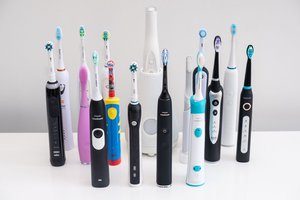
- Both electric toothbrushes are affordable.
- They include pressure sensors.
- Both promise superior plaque removal compared to manual brushing.
But they perform and clean in very different ways.
- So which one is actually better?
- Is Sonicare’s sonic vibration technology superior to Oral-B’s rotating brush?
- And which one offers better value for your money?
This Sonicare 4100 vs Oral-B Pro 1000 comparison will clarify the differences so you can decide which one suits your brushing style best.
Quick Decision Summary
- Choose the Sonicare 4100 if you prefer a gentler brushing feel, longer battery life, and a simple, quiet sonic experience. (Or read a full review of the Sonicare 4100)
- Choose the Oral-B Pro 1000 if you want a more mechanical scrubbing action and typically lower upfront cost. (See our in-depth Oral-B Pro 1000 review for more)
Both are effective – but they feel very different in daily use.
⚔️ Related Comparisons
If you’re not sure and want to explore more models, check out our collection of best Sonicare electric toothbrushes.
And if you’re exploring more options from this brand, see our guide to the best Oral-B electric toothbrush models.
Comparison Table: Sonicare 4100 vs Oral-B Pro 1000
| Feature | Sonicare 4100 | Oral-B Pro 1000 |
|---|---|---|
| Cleaning Technology | Sonic vibration | Oscillating-rotating |
| Brush Strokes / Movements | Up to 31,000 per minute | ~8,800 rotations + pulsations |
| Cleaning Modes | 1 (Clean) | 1 (Daily Clean) |
| Pressure Sensor | Yes | Yes |
| Brush Head Replacement Reminder | No | No |
| Battery Life | ~2 weeks | ~7–10 days |
| Noise Level | Quieter | Louder |
| Typical Price | Mid-range | Often slightly lower |
Sonic vs Oscillating Cleaning: How Sonicare and Oral-B Differ
This is the biggest difference between the two.
Sonicare 4100
- Uses high-frequency side-to-side sonic vibrations that help:
- Disrupt plaque along the gumline
- Drive fluid between teeth
- Create a sweeping cleaning motion
The brushing feel is smoother and more like a powerful manual toothbrush.
Oral-B Pro 1000
- Uses a small round brush head that:
- Rotates back and forth
- Pulsates to break up plaque
- Focuses on one tooth at a time
The brushing experience feels more mechanical and concentrated.
Neither system is inherently “better.” They simply clean in different ways.
Which Removes Plaque More Effectively?
Both brands have strong clinical backing and are widely recommended by dental professionals.
In real-world use:
- Plaque removal is excellent with both models
- Gumline cleaning is effective with proper technique
- Results depend more on brushing time and consistency than brand
In daily use, technique and consistency matter far more than whether you choose sonic or oscillating technology.
Some users feel Oral-B’s rotating head gives a more targeted clean around each tooth. Others prefer Sonicare’s broader sweeping motion, especially along the gumline.
But most adults would not notice a dramatic difference in plaque removal if brushing correctly.
Pressure Sensors and Gum Protection Compared
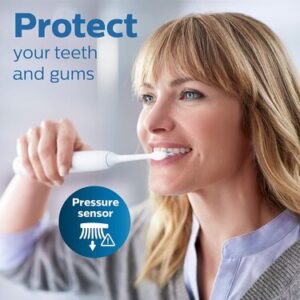
Both models include pressure sensors to help prevent brushing too hard.
However, they behave slightly differently:
- Sonicare 4100 reduces vibration intensity when excess pressure is applied.
- Oral-B Pro 1000 slows or signals when too much force is used.
In practical use, both help protect gums effectively.
Battery Life Compared: Sonicare 4100 vs Oral-B Pro 1000
This is one area where Sonicare has a noticeable advantage.
- Sonicare 4100: ~2 weeks per charge
- Oral-B Pro 1000: ~7 to 10 days per charge
If you travel frequently or dislike charging often, the Sonicare model offers more convenience.
But for other users, this variation in battery life is of little practical importance.
Compared: Noise and Brushing Feel
Sonicare 4100:
- Quieter
- Smooth vibration
- Less “gritty” feeling
Oral-B Pro 1000:
- Louder
- Stronger mechanical sensation
- Smaller, round brush head feel
This comes down almost entirely to personal preference. Some users love the concentrated rotating action. Others find sonic brushing more comfortable.
Who Should Choose the Sonicare 4100?
The Sonicare 4100 may be the better choice if you:
- Prefer a gentler brushing feel
- Want longer battery life
- Like quieter operation
- Prefer a more traditional brush head shape
It’s simple, effective, and easy to live with.
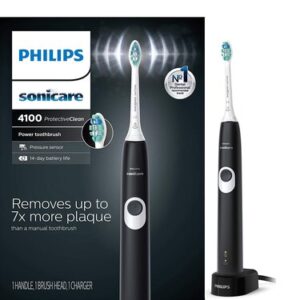

If budget matters most, you may also want to explore our guide to the best Sonicare under $100.
Who Should Choose the Oral-B Pro 1000?
The Oral-B Pro 1000 is ideal if you:
- Prefer a round brush head
- Like the feeling of individual tooth cleaning
- Want a slightly lower upfront price
- Don’t mind charging more frequently
It delivers strong mechanical cleaning at an accessible price point.

Also explore the thorny question: Sonicare vs Oral-B: Which Brand Is Better Overall?
Is Sonicare Better Than Oral-B?
This is one of the most common questions – and the honest answer is:
Neither is universally better.
- Sonicare uses sonic vibration and tends to feel gentler and quieter.
- Oral-B uses rotatory brushing and feels more mechanical and focused.
Both remove plaque effectively when used correctly. The better choice depends on which brushing style feels more comfortable and sustainable for you.
Final Verdict: Sonicare 4100 vs Oral-B Pro 1000
Both toothbrushes offer strong cleaning performance and pressure protection at an affordable price.
- Choose the Sonicare 4100 if you want longer battery life and a smoother, quieter brushing experience.
- Choose the Oral-B Pro 1000 if you prefer a rotating brush head and typically lower upfront cost.
In terms of cleaning effectiveness, consistency and technique matter more than brand.
FAQ: Sonicare 4100 vs Oral-B Pro 1000
1. Does Sonicare clean better than Oral-B Pro 1000?
Both brands provide excellent plaque removal. The difference is in cleaning motion and brushing feel.
2. Is the Oral-B Pro 1000 more powerful?
It feels more mechanical, but overall cleaning performance is comparable.
3. Which is better for sensitive gums?
Both include pressure sensors. Comfort largely depends on brushing technique and personal preference.
4. Which lasts longer on one charge?
The Sonicare 4100 typically lasts about two weeks per charge, while the Oral-B Pro 1000 lasts about 7–10 days.
5. Which is better for first-time electric toothbrush users?
Both are suitable for beginners, though some find Sonicare’s smoother vibration easier to adjust to.